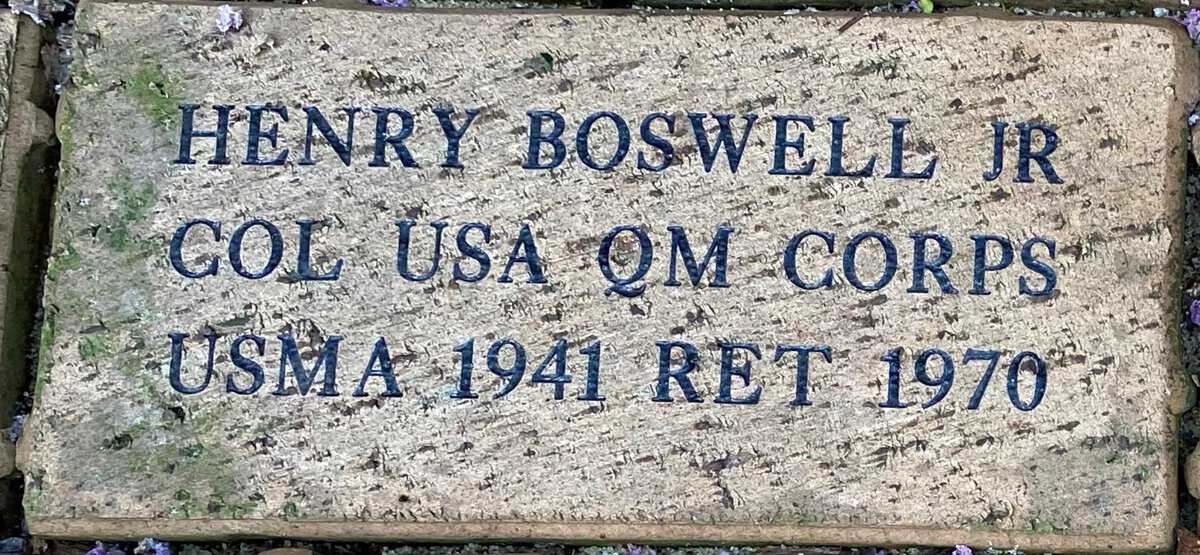
HENRY BOSWELL JR
COL USA QM CORPS
USMA 1941 RET 1970
COL USA QM CORPS
USMA 1941 RET 1970
Section: 14
Row: 8
Service Branch, Rank
Army
COL
Theater(s) / Campaign(s) / Operations(s)
unavailable
Period of Service
1941-1970
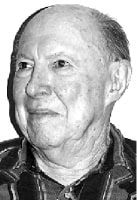
Biography
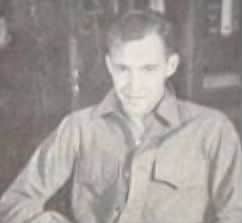
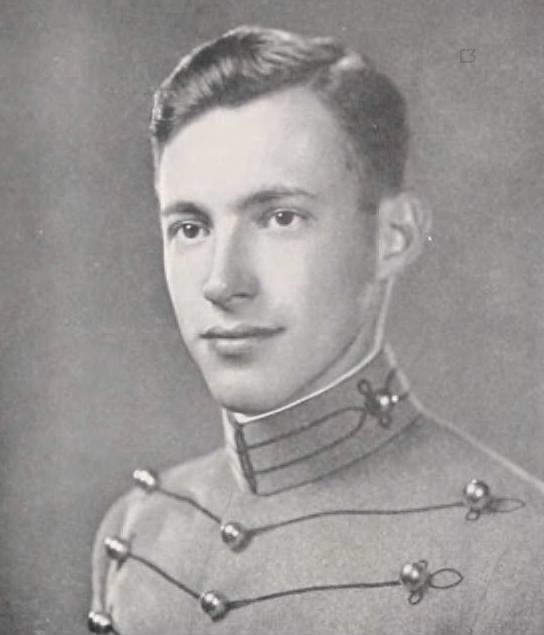
Henry (“Hank”) Boswell, Jr., was born and raised on the grounds of Mississippi’s first tuberculosis sanatorium, founded and directed by his father, “Doc” Boswell. Hank came of age during the Depression, and since his parents also had four daughters to put through college, his father obtained for Hank an appointment to the United States Military Academy at West Point, where tuition was free. Hank always claimed that he had no southern accent because it was hazed out of him there! While at West Point, Hank met his wife Catharine Eastburn. Catharine was a widow at 19, which qualified her to act as chaperone for her older sister Peggy. Peggy asked her date to bring his roommate, Hank, along to keep Cathy out of their hair, and Hank and Cathy hit it off. They married upon Hank’s graduation from the academy.
Hank’s class was known as “Black 41,” most likely due to their graduating so close to the bombing of Pearl Harbor. Hank received orders to Calcutta just before his and Cathy’s first child, Henry Boswell III, was born—also at the sanatorium. The army allowed him to stay until the child was born, then shipped him off, ironically, on the U.S.S. West Point.
The China-Burma-India theater of the war is often referred to as “the forgotten theater,” one dominated by the British due to their interests in India. Hank’s assignment, as he put it to inspire his children when they lacked confidence, was “to build a port” at age 23. Essentially, the job was to replace the Burma ports (which had been the access point to equip the Chinese in their fight against Japan until Japan overran Burma) with an Indian port. The port of Calcutta at that time was small, riverine, and inaccessible by large ships. Hank’s service record shows that he achieved that goal brilliantly, bringing the port into a performance level ranked the highest in the army’s purview. He was rapidly promoted to Lt. Colonel, a rank he maintained after the war. He also suffered dengue fever and returned home in a condition described as “malnourished” in his service records.
After the war, Hank was sent to Harvard, where he earned a Master’s degree in Business Administration. He and Cathy moved frequently while raising four children. His initial post-war assignment was to serve as liaison between the Department of Defense and American industry to ensure that the military would not again be caught unprepared for attack. He was sent to both the War College and the Command and Staff College, worked at the Pentagon for three years, and served several tours in increasingly high positions at the Quartermaster School in what was then Ft. Lee, VA. He was given one luxury posting to the Panama Canal Zone shortly before his retirement as a full colonel and commandant of the Field Army Support Command at Ft. Lee.
Hank and Cathy traveled around the country until they found a place they wanted to live: Grand Junction, CO, where Hank could enjoy golf, fishing, and exploring the back country of the western slope. They returned to Greensboro, NC in their last years to live with their daughter, Pat, and her husband. Cathy passed away soon after; Hank died nine years later, in 2010, at the age of 93. At his request, most of his ashes were scattered with his wife’s ashes in Greensboro, with some distributed by his son to other places he loved.
Additional Photos