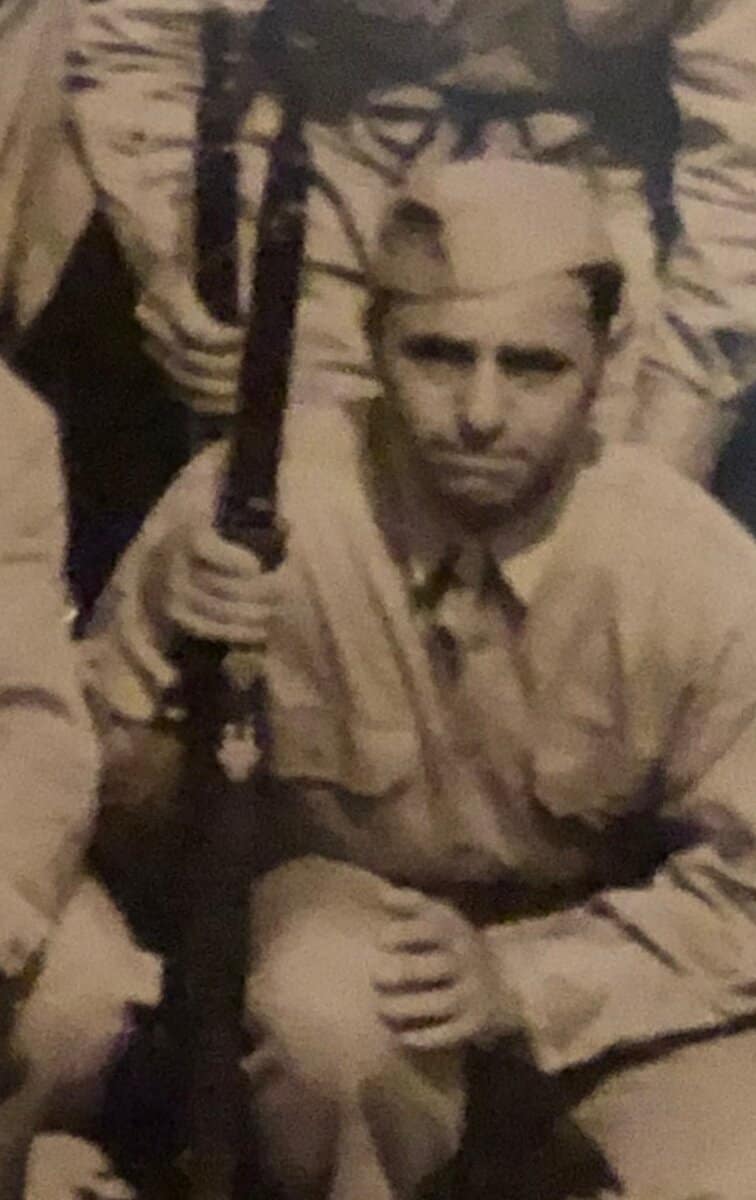
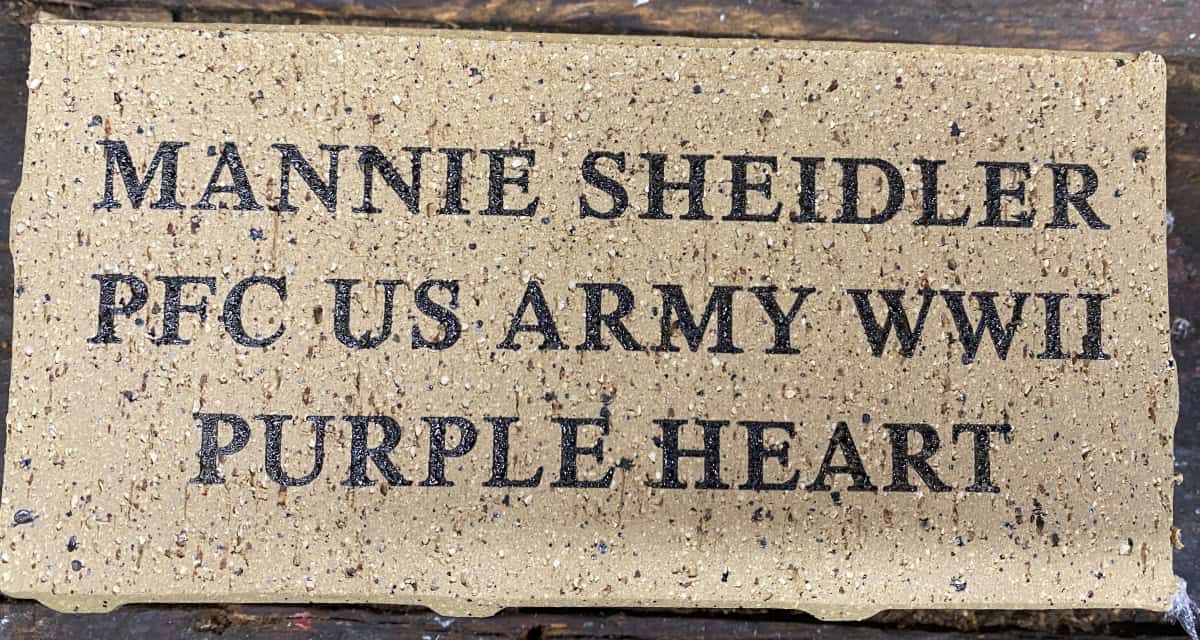
MANNIE SHEIDLER
PFC US ARMY WWII
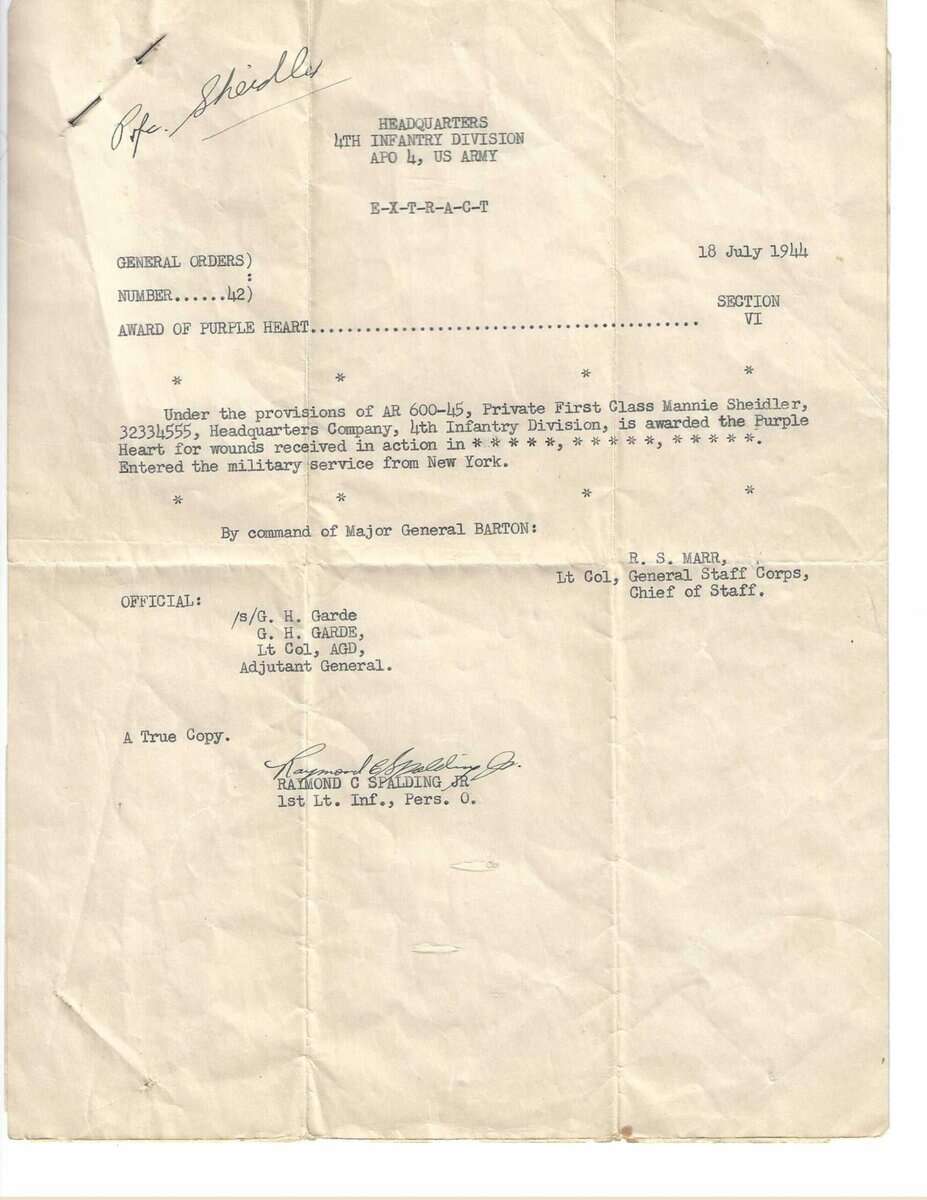
PURPLE HEART
PFC US ARMY WWII
PURPLE HEART
Section: 14
Row: 1
Service Branch, Rank
Army
PFC
Theater(s) / Campaign(s) / Operations(s)
WWII, D-Day, Utah Beach
Period of Service
1942-1945
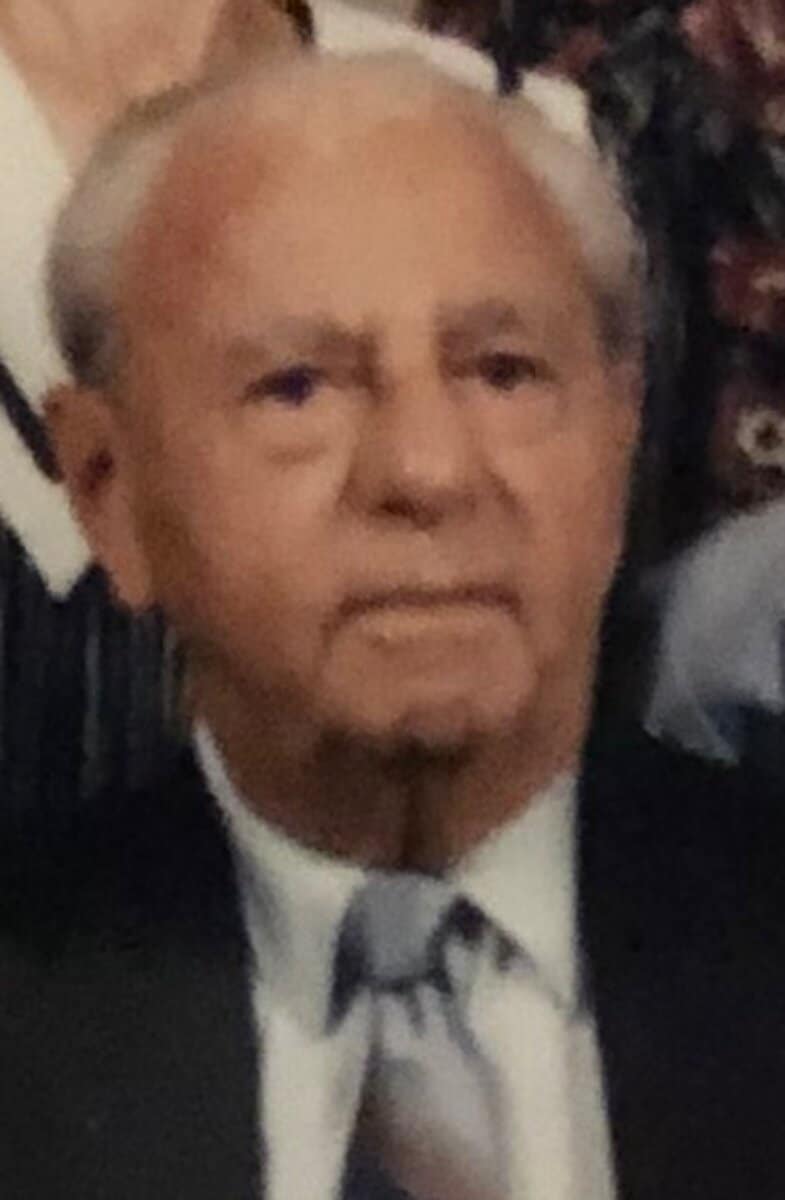
Biography
Born in 1909, Mannie Sheidler grew up in the densely-populated Bronx, a borough being built almost in real time by immigrants, industry, and ambition.
As the youngest of four children and the only son, Mannie was not obligated to join the military.
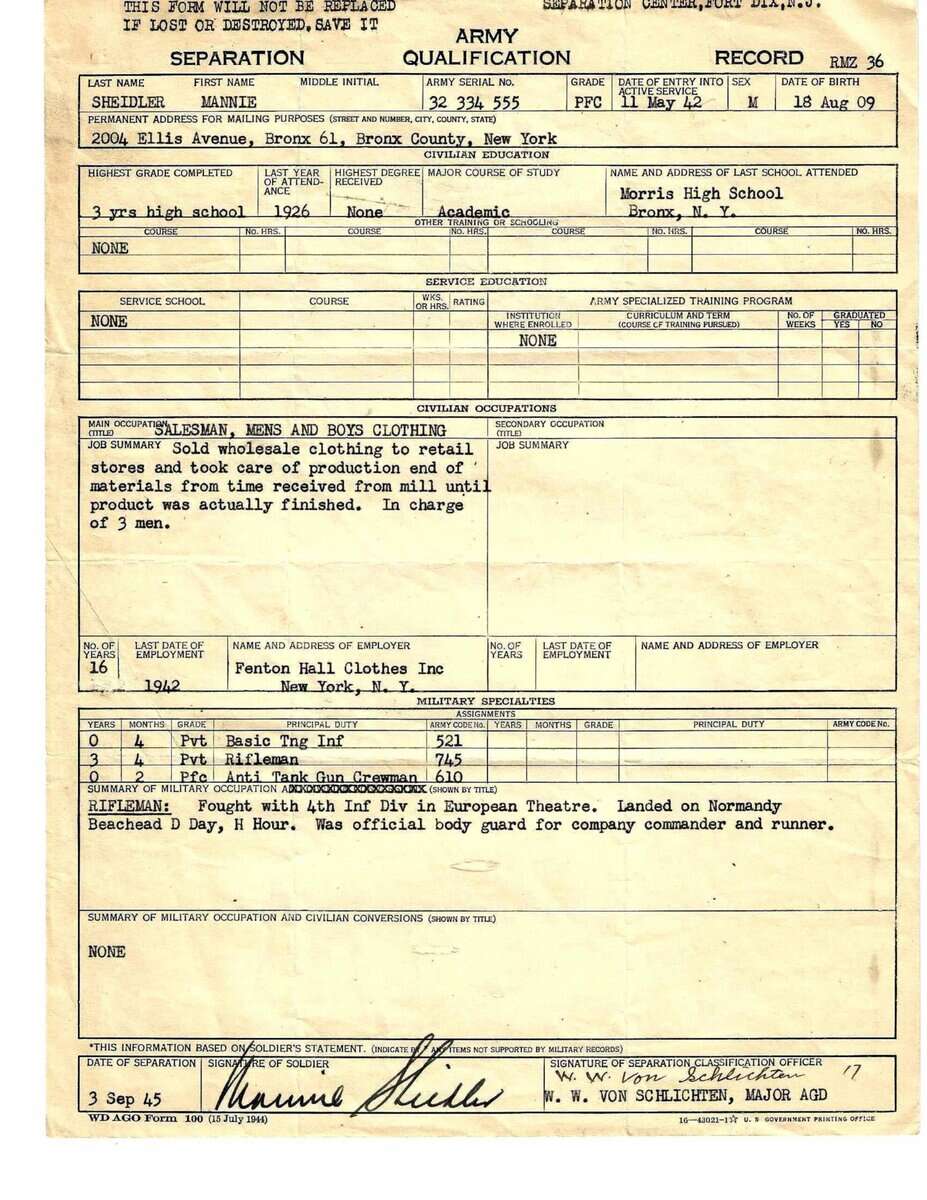
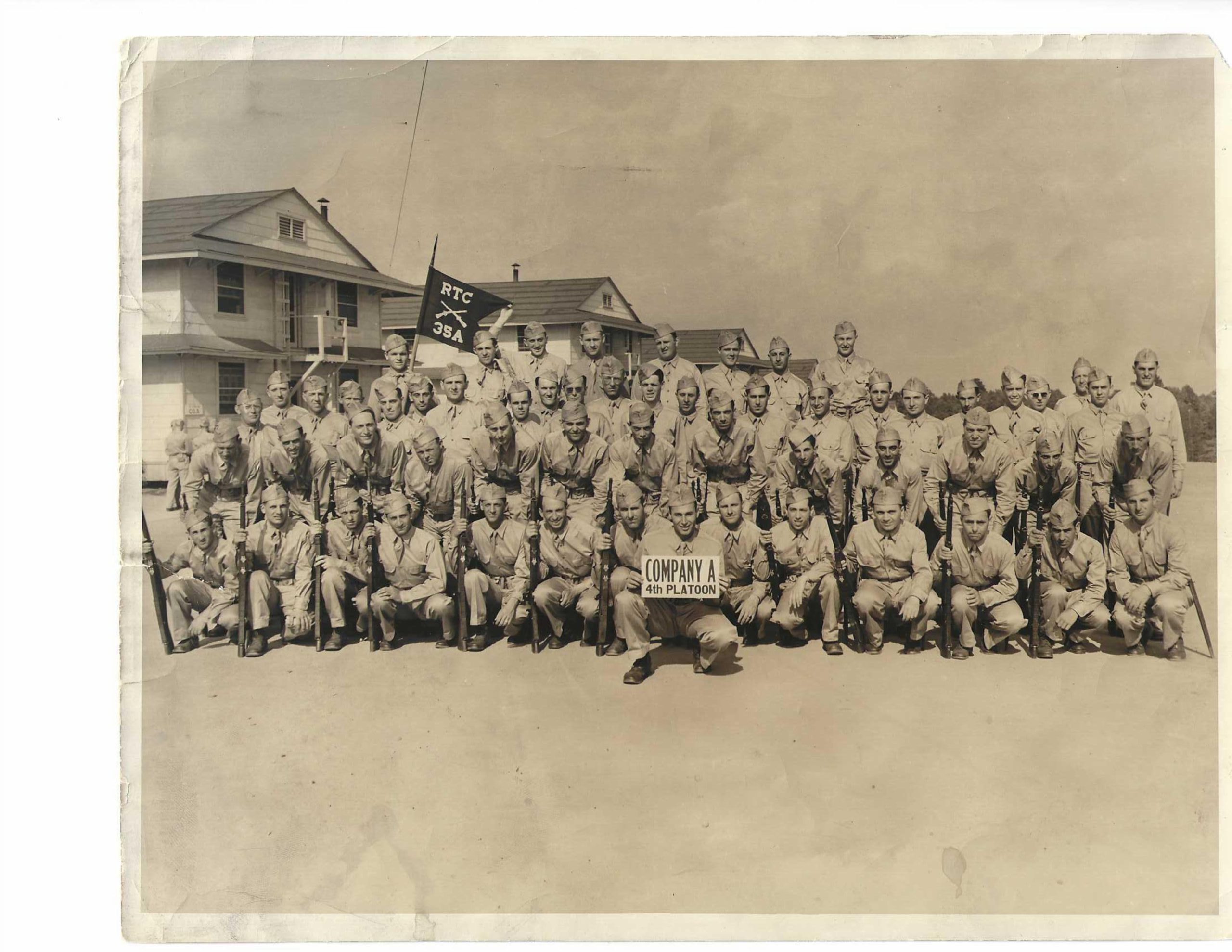
However, driven by a deep sense of patriotism, he volunteered for the Army at age 32. He went through basic training at Fort Gordon, GA in 1942. In 1943, he and his wife had their first son. Mannie wrote a letter to his young son in case he did not return from overseas.
His service during World War II began with the Allied invasion of Europe, where he landed at Utah Beach on D-Day as part of the 4th Infantry Division. For Mannie, a Jewish American, this moment held profound significance. He faced the dangers of enemy fire and the exhaustion of battle, but also carried the awareness that he was fighting against a regime built on hatred and persecution. This gave his service an added weight, shared quietly by many Jewish soldiers of his generation.
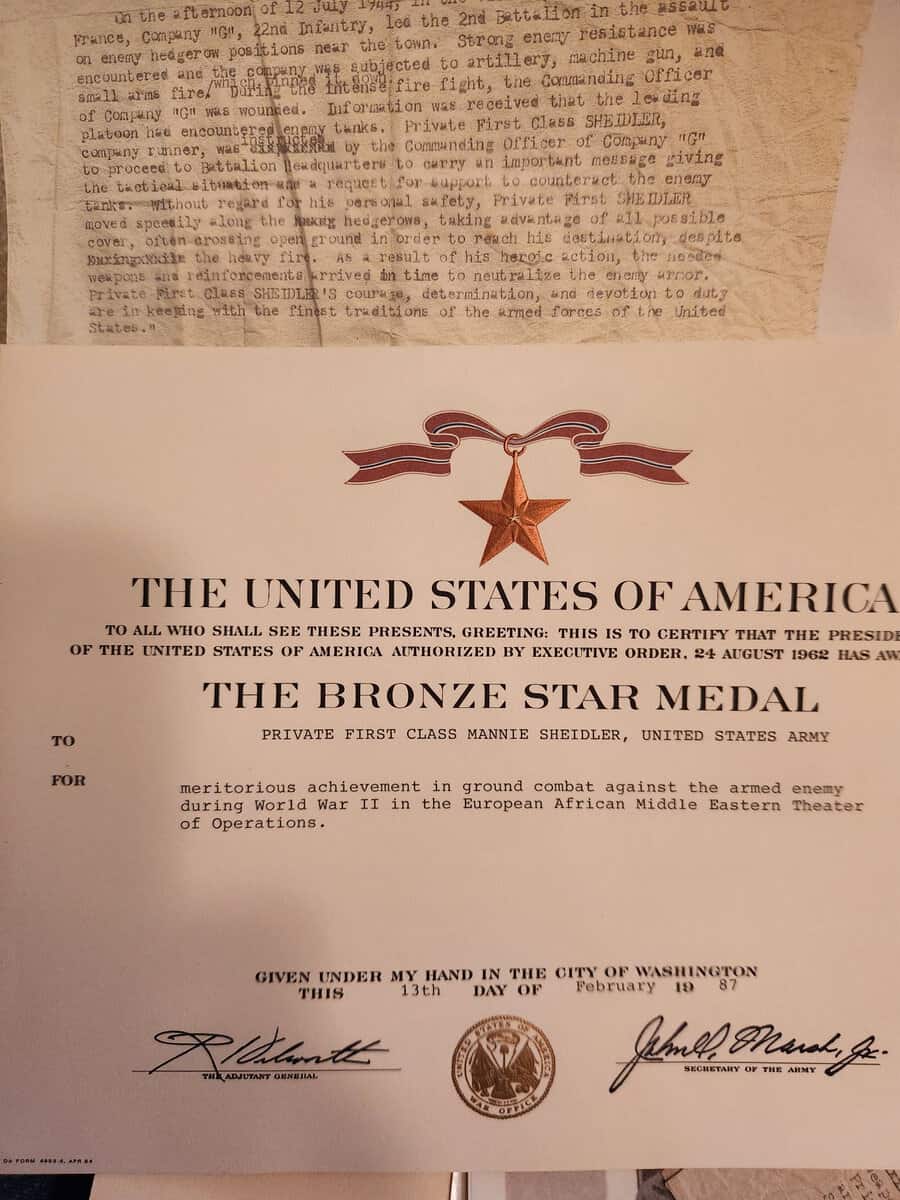
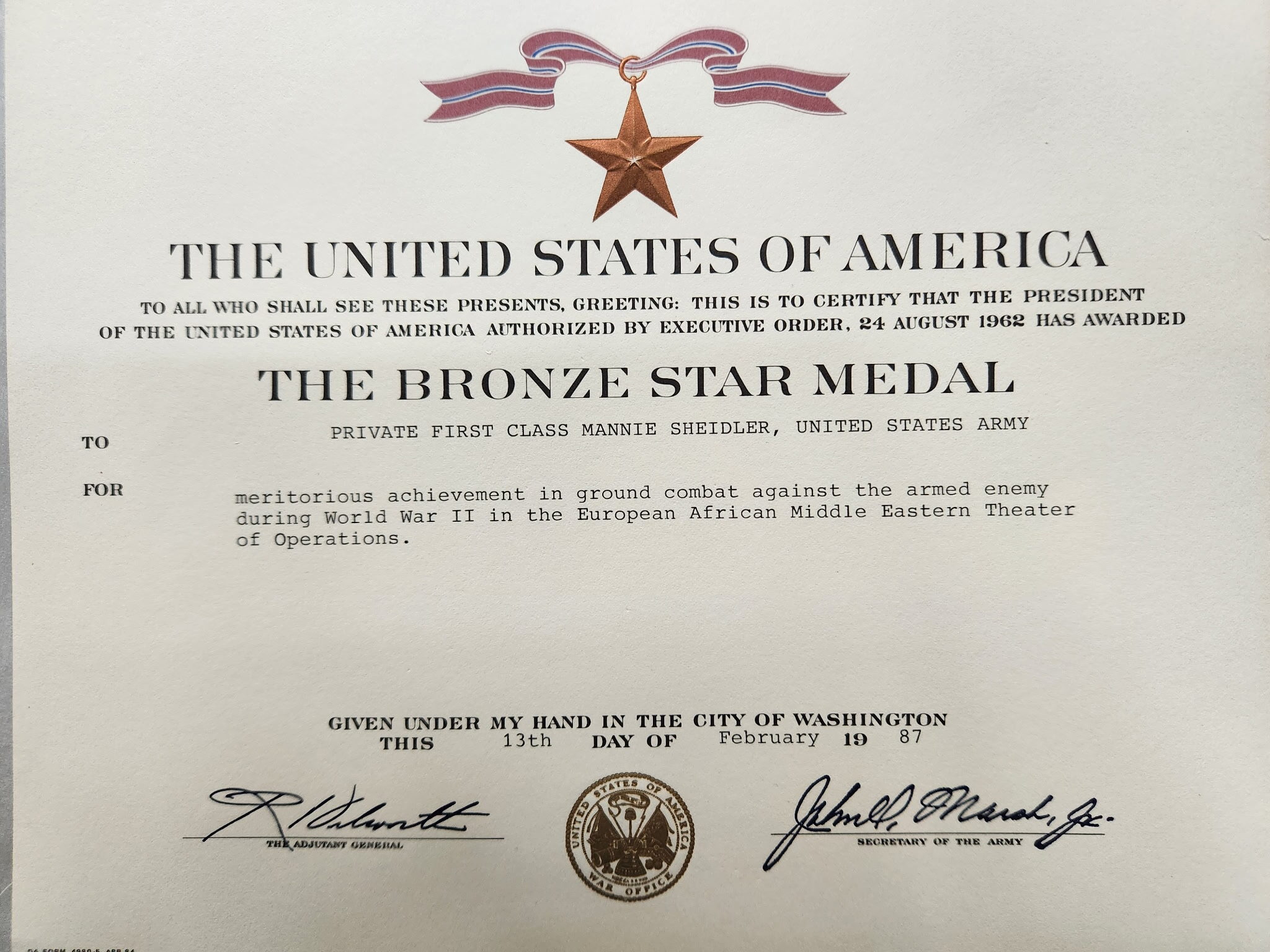
Mannie’s role in the Army was as a “runner”—a perilous job that involved surveying territory ahead and carrying urgent messages under fire to help commanders respond in real time. That danger became especially clear on July 12, 1944, near Le Hay de Puits, France, when Company G, 22nd Infantry, came under intense artillery, machine gun, and small arms fire during an assault on enemy hedgerow positions. After his commanding officer was wounded and word came that the leading platoon had encountered enemy tanks, Mannie was ordered to reach battalion headquarters with a critical message requesting support. Moving quickly along the hedgerows, using what cover he could and at times crossing open ground despite heavy fire, he delivered the message that helped bring forward the weapons and reinforcements needed to stop the enemy armor. For his actions, he was awarded the Bronze Star. His discharge paper also states that he was the official bodyguard for the company commander. The risks in these roles were immense, and Mannie’s willingness to serve in such a capacity reflected both his loyalty to his country and his determination to stand against hatred.
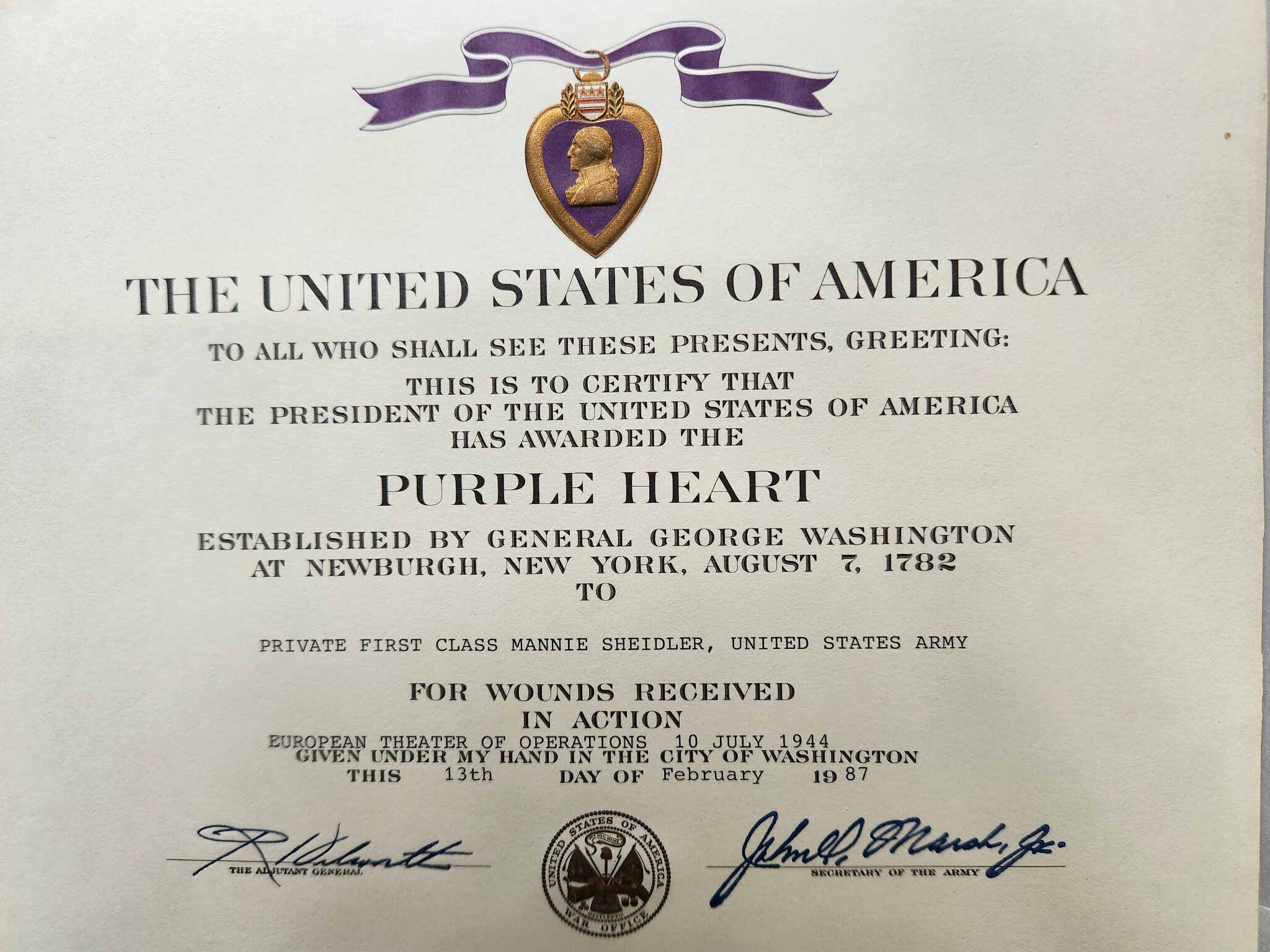
Having been wounded by shrapnel, Mannie went on to become an assistant to Chaplain Maurice Frank for the rest of the war, as he remembered his basic Hebrew skills.
Mannie was separated from the Army in September of 1945. He returned home to New York and resumed his career in the clothing industry. He had three more children. In 1956, the family moved to the west coast of Florida.
He rarely spoke of his war experiences, except when with his friend Joe, whom he saw every few years during visits to New York. Their bond was forged in shared adversity—Joe lost a leg during the war, while Mannie was fortunate to escape without visible injuries. Their friendship was a testament to the deep connections formed in times of conflict.
Mannie passed away on September 30, 1995, and is buried at the Florida National Cemetery in Bushnell, Florida.
Medals / Awards / Recognitions
Bronze Star
Purple Heart
Purple Heart
Additional Photos